


 Bitter Gourd Extracts
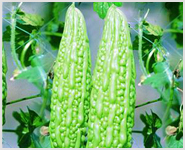 Bitter Gourd Herb or Karela is seasonal vegetable and very bitter in taste it is a rich source of phosphorous. The needs of phosphorous in human body are fulfilled by regular use of bitter gourd is invigorating and keeps. It purifies blood, activates spleen and liver and is highly beneficial in diabetes.
The bitter gourd is a common vegetable cultivated exten sively all over India. It is 10 to 20 cm. long, tapering at the ends and covered with blunt tubercles. The seeds are white in raw fruits and become red when they are ripe. There are two varieties of this vegetable. The large kind is long, oblong and pale green in color. The other kind is small, little oval and dark green. Both the types are bitter in taste. They turn reddish-orange when ripe. Bitter Gourd has excellent medicinal virtues. It is antidotal, antipyretic tonic, appetizing, stomachic, antibilious and laxative. The bitter Gourd is also used in native medicines of Asia and Africa.
Bitter Gourd UsesSeveral research trials followed the discovery, culminating in studies examining Bitter Gourd's effectiveness in humans.
• Diabetes : The bitter gourd is specifically used as a folk medicine for diabetes. Several researches proved
that it contains a hypoglycaemic or insulin-like principle, designated as 'plant-insulin', which has been
found highly beneficial in lowering the blood and urine sugar levels.
• Piles : Juice of the fresh leaves of bitter gourd is valuable in piles.
• Blood Disorder : Bitter gourd is highly beneficial in the treatment of blood disorders like blood boils,
scabies, itching, psoriasis, ring-worm and other fungal diseases.
• Respiratory Disorder : Bitter gourd plant roots are used in folk medicine for respira tory disorders from
ancient times.
• Alcoholism : Leaf juice is beneficial in the treatment of alcoholism.
• Cholera : Fresh juice of leaves of bitter gourd is also an effective medicine in early stages of cholera and
other types of diarrhoea during summer.